Welcome to your child's water safety journey

WHAT TO EXPECT IN OUR ISR LESSONS

Discover how we create confident little swimmers, ensuring your child's water safety and your peace of mind.
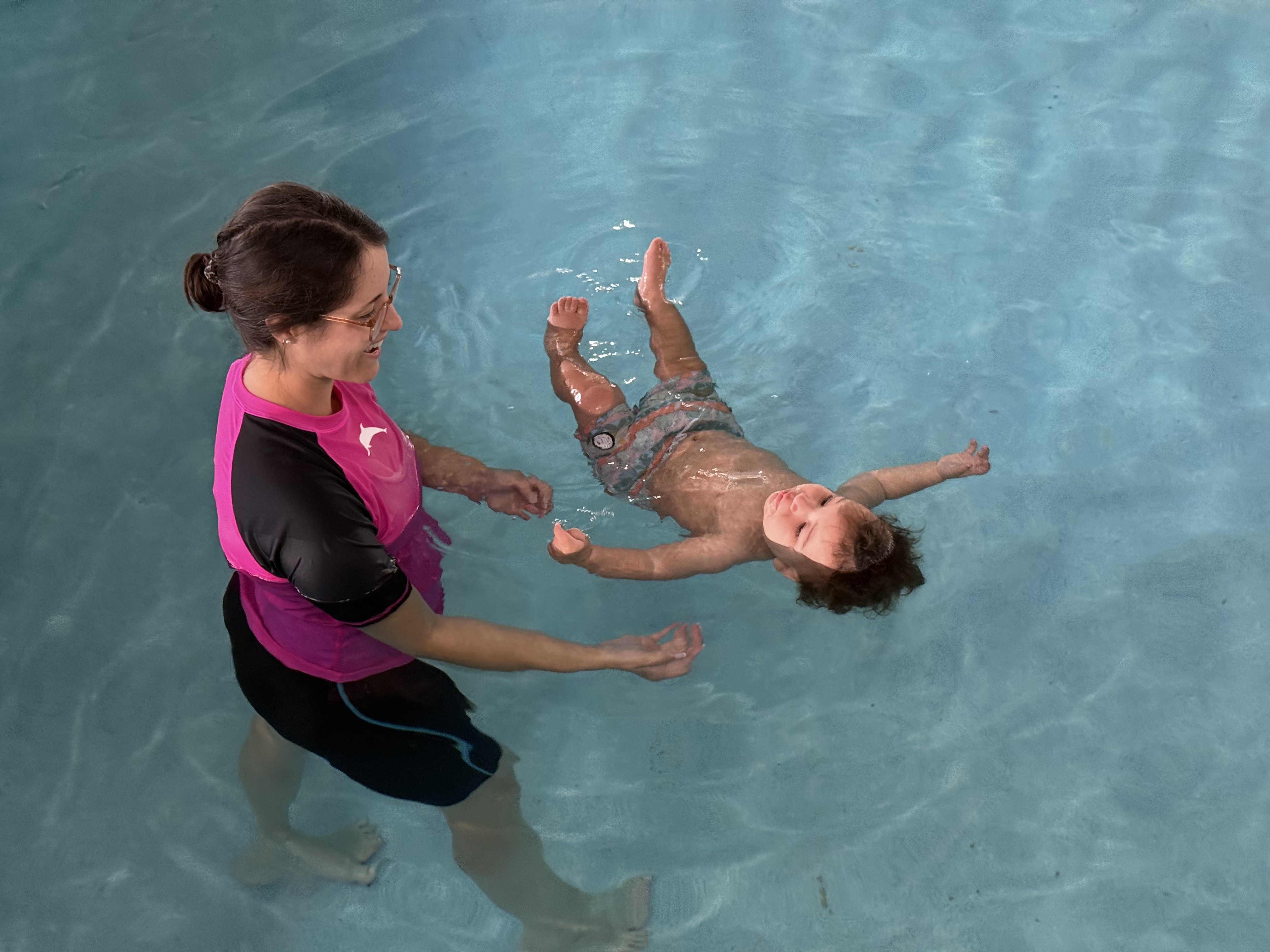
Drowning Prevention Starts Here

Infant Swimming Resource’s Self-Rescue® program is designed for children 6 months to 6 years and focuses on safety, confidence, and life-saving skills. Lessons are one-on-one, 10 minutes per day, 5 days a week, typically over approximately 6-7 weeks. This structure allows children to learn at their own pace while keeping sessions short, safe, and focused.

Lesson Focus by Age:

  • 6 months + (Rollback to Float): Lessons teach infants to roll onto their back to float, rest, and breathe, maintaining this position until help arrives. Can start as early at 6 months of age, as long as the child can get to a sitting position on their own and maintain it for at least 1 minute.

  • Swim-Float-Stay: Children learn to swim a short distance, roll onto their back to float, rest, and breathe until they can reach safety or help arrives. (Flipping over to continue to swim comes with age and willingness).

  • Swim-Float-Swim: Once the child is actively walking they learn the swim-float-swim sequence: swimming face down, rolling onto their back to float and breathe, then resuming swimming until they reach safety. This depends on child's age, developmental readiness, willingness & cooperation.

    Once proficient, skills are practiced fully clothed to simulate real-life situations.

Daily Lesson Structure & Parent Role:

  • 1:1 Instruction: Each child receives individual attention, ensuring lessons are tailored to their developmental needs.

  • Short & Consistent: 10-minute daily sessions allow for high engagement and steady progress without fatigue.

  • 5 Days per Week: Frequent practice builds muscle memory, confidence, and skill retention.

  • Parent Involvement: Parents observe lessons, encourage their children, support practice at home, and receive guidance to reinforce skills safely.

What To Expect:

  • Scheduling: Through email or phone communication with me, you will choose your start date and time based on availability.

  • Initial Clearance and Online Registration:Complete initial clearance through the national ISR office online by filling out registration forms and pay the $105 fee using the unique URL provided. (This fee is non-refundable and goes directly to ISR, not your instructor.) ISR's team of nurses reviews all the information to ensure your child can safely participate in lessons.

  • Approval:Wait for confirmation from ISR. Upon approval, your child will be officially scheduled for lessons.

  • Start Date Confirmation and Information Packet:Receive an email with your child's start date and time, along with an informational packet.

  • Pre-Lesson Communication:Before lessons, get an email from your instructor with directions, ISR Policies, and a welcome letter with tips.
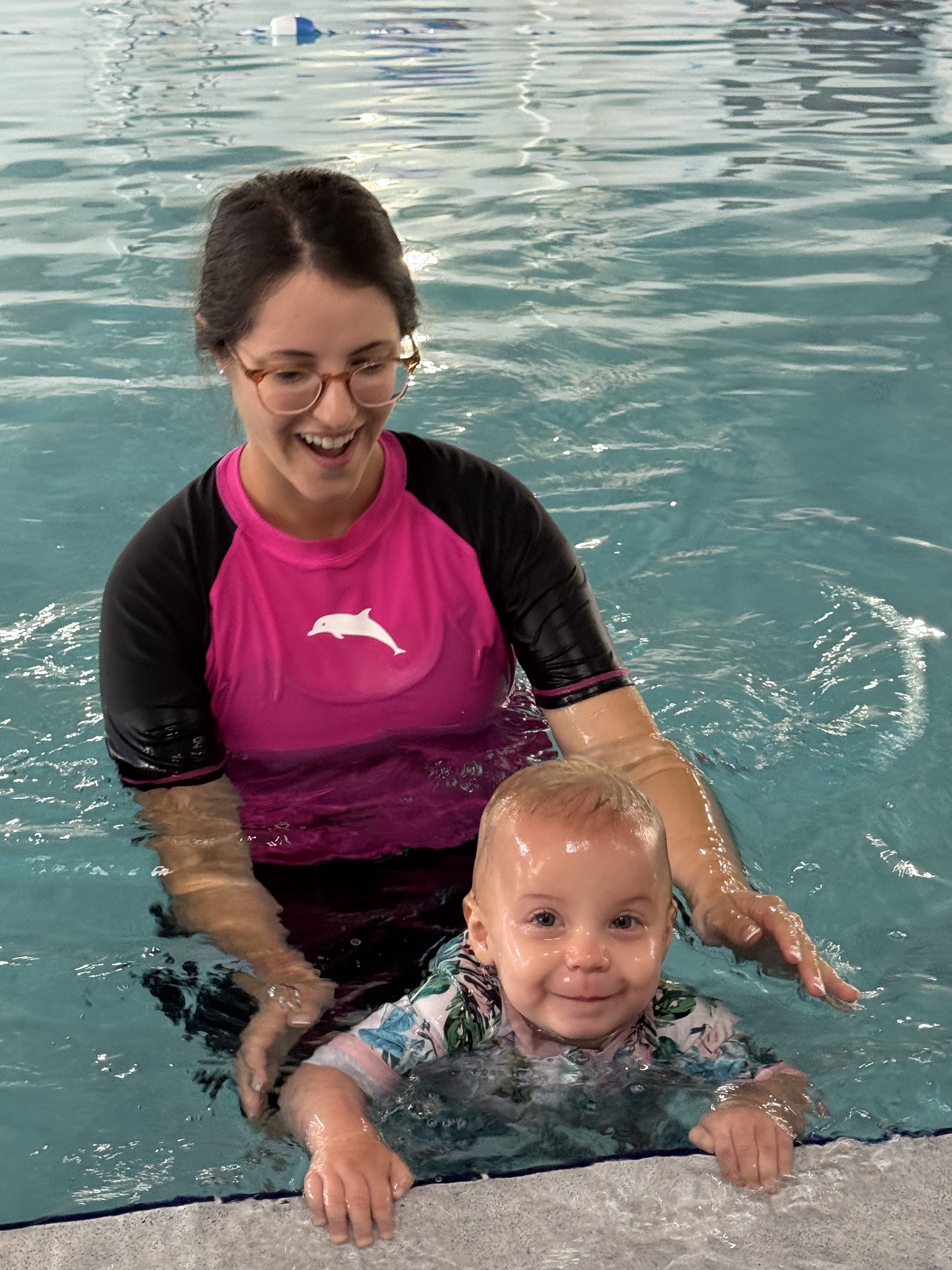
Swim Instructor Image
FAQs
Will my child fear the water because of lessons?
There is an important difference between being fearful and being apprehensive because you are not yet skilled in a new environment. ISR is not like traditional swim lessons; it is a drowning prevention program that teaches survival swimming. Sometimes as a parent, you make choices for your child’s safety, like sitting in a car seat, because you know they are important. The same can be said for ISR. Fun can be defined as when skill meets challenge. Once competent in their skills, many children cannot be dragged away from the pool. They are having entirely too much FUN.
Is this the program where you throw the babies in the water?
Absolutely NOT! Each kick, breath, reach, and rotation is positively reinforced. Once a child is FULLY skilled we will integrate simulated fall ins but always with us inches away and never from outside of the pool.
Will my child actually learn how to swim?
Yes! Any child of walking age will learn to hold their breath, kick and reach to swim to get to the wall, steps, or to an adult they are swimming towards. We teach children to swim by honoring each child's individual strengths and experiences. We understand the fundamentals of the behavioral sciences, child development and of sensori-motor learning as it relates to the acquisition of aquatic survival skills; We use this education to guide each child through the sequence of learning to swim and float. *While all children leave with the skill of the Rollback to Float, exact skillset learned within the 6 week program depends on child's age, developmental readiness, willingness & cooperation.*
Will my child cry? Will they develop a fear of the water?
Yes, this is very likely. Just as they cry with anything new before they have an established vocabulary. They cry during tummy time, in the carseat, during diaper changes…the list goes on. Crying can stem from separation, sensory overload or from woking hard. Learning a new skill—especially at a young age—can bring big emotions, and that’s a normal part of the process. It does not mean trauma, nor does it mean they will have an aversion to water. Our lessons are no different. I am a new person to your child, teaching them new things, so it is normal to have some emotions at first but as they learn to be independent in their skills most of the time the crying goes away pretty quickly. The first time you try a new task it is always challenging, until you get the hang of it. It is the same for your child. They are learning to perform a new skill that he/she's never done before. I always encourage parents to watch their child's behavior before, during and after lessons. Some children cry only during the actual lesson and are happy and smiling once they are laying on their towel and back in your arms. It is imperative that all parties bringing the child to lessons—spouses and caregivers—know this and are onboard. Negativity or anxiety from the parent before and during lessons will negatively impact their child's learning experience. Maintaining a "neutrally optimistic" demeanor will serve your child best. If you are not a believer in letting your child potentially feel nervous or uncomfortable to learn something new, and not comfortable letting an expert help them through that to the skills on the other side, then ISR is likely not the right fit for your family. Our aim is to build confidence through competence, not an automatic love of swimming/water where the skills are optional. Many of our students wind up loving their time in the pool with us and, in turn, with you. But those feelings are not critical to their success in lessons. A child can still learn even when they are less than thrilled about it, and with age and maturity most get happy in lessons eventually!
Download ISR's Family Aquatic Safety List to help protect your family from the hazards of an aquatic environment
Download Safety List

Reach out today

Discover more about our programs and how we can help you.